
How to pack light for cold weather in a carry-on: 8 nights in Stockholm and Oslo
Wear the bulkiest layers on travel days and pack thin ones: merino base, fleece, down jacket and winter boots on you; wool socks and a light rain shell in the bag. That's our pick for a winter carry-on from November to February. For eight late-November nights in Stockholm and Oslo, the worn set is 2,454 g by listed weights; a 40 L Tortuga Lite holds the rest inside SAS's 8 kg. The trade-off is flying in boots and down; packing them adds 1.5 kg.
The planned route, day by day
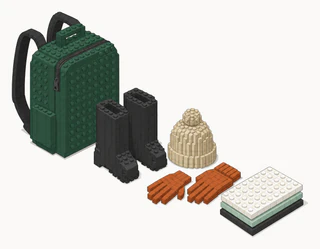
- Day 1, Wednesday 25 November 2026: SAS from London Heathrow to Stockholm Arlanda, a route SAS lists on its London to Stockholm page.
- Days 1 to 5: five nights in Stockholm.
- Day 6, Monday 30 November: the SJ high-speed train from Stockholm Central to Oslo S, which SJ's Norwegian site says takes "less than 6 hours", with five departures each way on weekdays.
- Days 6 to 8: three nights in Oslo.
- Day 9, Thursday 3 December: Norwegian from Oslo Gardermoen to London Gatwick, a nonstop route on Norwegian's Gatwick to Oslo page.
The dates follow a question on r/TillSverige from someone planning a week in Sweden in November, with Oslo added by train. The rail day needs one check before booking. Vy's traffic page lists engineering works between Stockholm, Karlstad and Oslo from 21 August to 12 December 2026, aimed at Vy's weekend trains, and says weeks 45 to 49 run as normal. We didn't find an SJ notice for 30 November, and a Monday train runs outside the weekend pattern. If a replacement bus does turn up, SJ's luggage rules warn that every bag, hand luggage included, may have to go in the bus's hold, so the passport and phone ride in a jacket pocket that day.
November to February weather from SMHI and MET Norway
| City and month | Mean high | Mean low | Mean temperature | Precipitation | Sunrise and sunset |
|---|---|---|---|---|---|
| Stockholm, November | 5.4 °C | 1.9 °C | 3.6 °C | 47.6 mm; 10.7 days with 1 mm or more | 08:04 to 15:04 on 25 Nov; 08:13 to 14:58 on 29 Nov |
| Stockholm, December | 2.5 °C | −1.2 °C | 0.6 °C | 47.8 mm; 10.8 days with 1 mm or more | 08:43 to 14:48 on 21 Dec |
| Stockholm, January | 1.0 °C | −2.9 °C | −1.0 °C | 37.0 mm; 8.7 days with 1 mm or more | 08:30 to 15:23 on 15 Jan |
| Stockholm, February | 1.2 °C | −3.2 °C | −1.0 °C | 29.4 mm; 7.6 days with 1 mm or more | 07:24 to 16:40 on 15 Feb |
| Oslo, November | not published | not published | 2.2 °C | 85 mm | 08:49 to 15:21 on 30 Nov |
| Oslo, December | not published | not published | −1.4 °C | 54 mm | 08:55 to 15:18 on 3 Dec |
| Oslo, January | not published | not published | −2.3 °C | 58 mm | 09:04 to 15:48 on 15 Jan |
| Oslo, February | not published | not published | −2.0 °C | 46 mm | 07:55 to 17:07 on 15 Feb |
Normals are for 1991 to 2020: Stockholm from SMHI's normal-value series, Oslo from the Blindern station files at Norsk klimaservicesenter, run by MET Norway with partners. Sun times come from MET Norway's sunrise API in local time (UTC+1). We checked the trip rows (Stockholm and Oslo in November, Oslo in December) and their sun times on 8 October 2026, and the other five rows on 21 November 2026. MET's station files give the monthly mean and precipitation only. The Oslo high and low cells read "not published" for that reason.
November afternoons average 5.4 °C in Stockholm, yet SMHI still counts 9.3 November nights below 0 °C, so the boots need grip as much as warmth. Wet days decide the outer layer: almost 11 of them in a Stockholm November. That fits what zkareface wrote on r/TillSverige: "November in Stockholm is still not freezing temperatures, but can be windy." Oslo runs colder, with a −1.4 °C December mean, and wetter, at 85 mm in November. Daylight shrinks from 7 hours on arrival to 6 hours 23 minutes on the flight home. In the same thread, Disastrous_Task_7961 called the month "cold, wet and dark" and added: "Some reflective bands would be more useful."
Cabin limits on the flights, the train and at security
| Leg | The operator's limit | What it means for this bag | Checked |
|---|---|---|---|
| Day 1, SAS, Heathrow to Arlanda | Cabin bag 55 × 40 × 23 cm and 8 kg; under-seat bag 40 × 30 × 15 cm, 18 L (SAS) | Tortuga lists the Lite 40L at 55 × 35 × 20 cm: 5 and 3 cm to spare on width and depth, none on height, and its 22 in figure is 55.9 cm, so measure it packed. Economy Light covers the under-seat bag only; adding the cabin bag costs 179 SEK (€16) until 4 hours before departure and €50 at the airport | 26 Oct 2026 |
| Day 1, Heathrow security | Containers up to 2 litres can stay in the bag (Heathrow) | Pack to Oslo's stricter rule anyway, because the flight home screens there | 26 Oct 2026 |
| Day 6, SJ, Stockholm Central to Oslo S | Up to two bags of 80 × 50 × 35 cm and 20 kg each, plus one small piece of hand luggage, all carried by you (SJ) | No size problem; smaller bags go on the rack above the seat | 8 Oct 2026 |
| Day 9, Oslo Gardermoen security | Liquids in containers of 100 ml, in one transparent resealable bag of up to 1 litre (Avinor) | Toiletries live in one 1 L bag for the whole trip | 26 Oct 2026 |
| Day 9, Norwegian, Gardermoen to Gatwick | LowFare: under-seat bag 30 × 40 × 20 cm, 10 kg. LowFare+ adds an overhead bag of 55 × 40 × 23 cm, 10 kg for both together (Norwegian) | Book LowFare+ or above; the backpack and the daypack share the 10 kg | 26 Oct 2026 |
Weight is tightest on the outbound flight. SAS's 8 kg applies to the cabin bag alone, and the Tortuga Lite takes 1.6 kg of that, a fifth, before anything goes in. Coming home, Norwegian's 10 kg covers both bags. The daypack's chargers count against it too. Power banks stay in the daypack on both flights, at 100 Wh or less under the FAA's limit for spares, and ICAO's rule from 27 March 2026 allows at most two per passenger on international flights; the battery rules on our main guide list the rest.
The Tortuga Lite 40L suits this route on size: 55 × 35 × 20 cm, 40 L and $250, as tall as both airlines allow but narrower and thinner, with what Tortuga calls a "clamshell opening" that lets the cubes lift straight out. Fit is the trade-off. Tortuga builds the Lite's harness for 19 to 21 inch torsos with no adjustment, and points shorter or taller backs to its adjustable Pro 40L, listed at 2 kg.
How to pack winter clothes and a coat in a carry-on
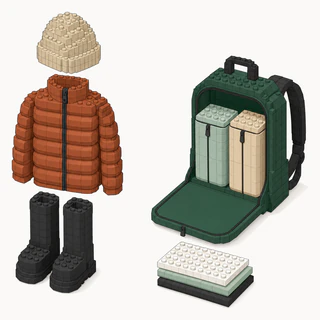
The coat and boots go on you and the thin layers go in cubes. Five pieces go on the body for each flight and the train: 2,454 g by the listed weights, with the boots alone at 1,080 g. The bag holds 3,274 g by the makers' listed weights, bag included, which leaves 4.73 kg of SAS's 8 kg for the items with no listed weight: socks, underwear, sleepwear and toiletries. Three cubes (two 7 L mediums and a 3 L small) take 17 L, and about 23 L is left around them.
Worn, 2,454 g
Packed, 3,274 g with the bag
In the cubes and pockets, no listed weight
In the daypack, under 40 × 30 × 15 cm and 18 L
Wearing a wool coat instead of the hoody works the same way. The flip comes when the hoody and the boots have to travel inside, on a trip that adds a warm leg or for someone who won't wear boots on a plane. Listed weights in the bag climb to 4,782 g, and a pair of mid boots then competes for the 23 L with the toiletries and the shell. Past that point a bigger bag or a checked bag is the straight answer, and the 40 L guide shows how far cubes stretch this size. On a trek, where poles, a stove and a sleeping bag join the layers, the trek gear guide splits them between the cabin, the hold and the trailhead town.
Three tees and four spare pairs of socks cover the first half, so plan one sink wash in Stockholm on night four. The laundry guide has the routine, and the merino page covers how long a merino layer lasts between washes.
What to cut from the r/TillSverige list
The poster on r/TillSverige planned a November week with four wool sweaters, 200gsm wool base layers, a puffer vest, a down coat, boots, wool leg warmers, shearling ear muffs, hand warmers and a waterproof shell "worn under puffer coat". They had been told they were "too paranoid and overthinking", and their later edit thanked the commenters. Coming from Southern California, with a note that once they get cold they stay cold, the instinct to overpack makes sense.
Four sweaters become one fleece over merino. Randomswedishdude put it plainly: "4 wool sweaters is def overkill." The vest goes, because the down hoody and the R1 Air already cover 1.9 °C nights. The shell stays for SMHI's near-11 wet days, carried as a separate layer and worn over the fleece when it rains. riktigtmaxat's view was "You need one wool sweater and waterproof jacket in case it rains or just a puffer jacket for dry weather", and the same commenter added that "you never wear a puffer jacket on top of a shell unless you're just taking a break when hiking or skiing". Leg warmers and ear muffs give way to the 200 g leggings and a beanie. The base layers and boots on the original list stay.
If you run cold
A poster on r/HerOneBag planning eight days in Germany and Prague over Thanksgiving faced SAS's 55 × 40 × 23 cm limit and wrote: "I run cold and I'm not skinny". The replies were practical. AurelianaBabilonia: "Wear the coat on the plane; don't pack it." AussieKoala-2795: "My gloves, scarf and beanie will be in the pockets of my coat." And earwormsanonymous, on the weight cap: "Take that 8 kg /17.637 lb. restriction seriously."
For a cold sleeper or a slow walker, add one warm piece and keep the rest. Here that means the leggings under the Ferrosi on the Oslo days, and a third 200 Oasis crewe at 217 g if the scale still has room.
Rain is where the down hoody struggles. theinfamousj on r/onebag summed it up: "The first rule of down is, "Don't get it wet."" On a wet Stockholm day the shell goes over the fleece and the hoody stays in the daypack; one waterproof insulated jacket can replace both, at more weight and bulk. The rain jacket or umbrella guide covers that choice.
FAQ
Can you fit ski gear in a carry-on?
Ski clothing, yes, since it counts as clothes in the cabin bag. Skis and poles, no: the US TSA lists ski poles as checked-bag only. SAS treats skis, a helmet, poles and a boot bag as one checked item of up to 23 kg, booked at least 24 hours ahead and never included on Economy Light. Norwegian takes a ski bag and boot bag together up to 23 kg, for £35–40 online or £45 at the airport, each way. Neither page (read 26 Oct 2026) offers the cabin for boots: SAS counts the boot bag and helmet inside that one checked item, and Norwegian says the bags "can only contain relevant skiing or snowboarding equipment". United says "If you only bring a boot bag, it's still considered a bag of ski or snowboard equipment." easyJet's ski-deals page says you could "carry them as your cabin bag on board", only if they fit its 45 × 36 × 20 cm under-seat size or a bought large cabin bag. TSA's What Can I Bring list had no ski-boots entry when we searched it on 26 Oct 2026. Its Helmets entry says "Carry On Bags: Yes", but that covers security only, and no airline page we read puts a helmet in the cabin, so ask your airline.
Can you take hand warmers on a plane?
Air-activated ones, yes, by US rules. The TSA allows hand warmers in carry-on and checked bags, and the FAA says disposable iron, carbon or charcoal warmers aren't regulated, while warmers that burn liquid or gas fuel are forbidden. Avinor's list for Oslo doesn't mention them. Battery-heated gloves, socks, jackets and vests fall under the FAA lithium rules instead: their spare batteries and power banks go in the cabin bag only, and each lithium-ion battery is "limited to a rating of 100 watt hours (Wh)". The electronics guide's battery rules cover the rest. The TSA's Heated Jackets / Sweaters entry says "Carry On Bags: Yes (Special Instructions)" and points to the FAA rules. Whether you need any at all is open: on r/AntarcticaTravel, one reply to a late-November traveller read "Four times to Antarctica and have never used them or missed having them."
How do you pack one carry-on when a trip hits both hot and cold climates?
Wear the bulky cold layers on the cold legs and park them in a cube when you move to a warm stop. The Japan packing list covers the Shinkansen bag rule and month table; the Southeast Asia list covers Thai AirAsia's 7 kg cabin-and-personal combined limit; the Lapland page covers renting the outer shell when the cold stop is Arctic.
Does this list work for a trip in December, January or February?
Yes, without adding a piece; what changes is how often the thermal leggings go on. In January SMHI counts 22.2 Stockholm nights below 0 °C, more than twice November's 9.3, and a 1.0 °C mean high, so wear them most days. MET Norway puts Oslo's January mean at −2.3 °C. Around 21 December, Stockholm daylight lasts roughly six hours.