
Carry-on medication rules: pills, liquid medicine and insulin (US, UK, EU)
Yes, medication can go in your carry-on at US, UK and EU security, including liquid medicine over 100 ml in amounts needed for the trip. In the US you declare the liquid, in the UK you need the prescription or a doctor's letter for it, and EU staff may ask you to prove it's authentic. Our pick is the personal item: all medicine in the bag that stays with you, labelled, with a prescription copy. The trade-off is space, since a diabetes kit fills much of an under-seat bag.
Security rules in the US, UK and EU
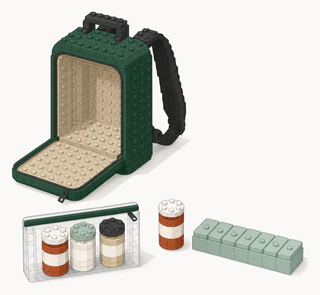
All three allow medicine in the cabin, including liquids over 100 ml. They differ on proof, cooling packs and worn devices. The six pages linked in the last row and the four rule pages linked further down (TSA's liquid-medication item page, Dublin Airport security, GOV.UK on controlled drugs and the EU's Your Europe) were all read 30 Oct 2026.
| US (TSA) | UK airports | EU airports | |
|---|---|---|---|
| Tablets and capsules | Allowed; labelling them speeds up screening | Allowed; no proof needed | Outside the liquids rule |
| Liquid medicine over 100 ml | "Reasonable quantities for your flight", declared at the checkpoint | Up to 2 litres a container; proof needed for a liquid over 100 ml | Allowed "only for use during the trip"; staff may ask you to prove it's authentic |
| Ice or gel packs cooling medicine | Frozen, partially frozen or melted | Cooling gel packs allowed; ice packs: "Contact the airport" | Not covered on the Commission's page; ask the airport |
| Pump or glucose monitor you're wearing | Stays on; self pat-down and hand swab in standard lanes | "Medical equipment is screened separately" | Not covered on the Commission's page |
| Official page, read 30 Oct 2026 | TSA medical conditions, TSA liquids rule | GOV.UK medicines, GOV.UK liquids | European Commission, Schiphol |
At a US checkpoint, TSA asks you to take medically necessary liquids out of the bag and put them in their own bin, along with "freezer packs, IV bags, pumps and syringes". You can ask for liquid medicine not to be X-rayed or opened, and TSA then clears it another way, which can mean a pat-down and a closer look at your bag. TSA also says officers will never put anything into the liquid. Its item pages end with the same line: "The final decision rests with the TSA officer".
In the UK, the proof rule is narrow. GOV.UK asks for a letter from your doctor or a copy of the prescription only when the medicine is both liquid and in a container larger than 100 ml, and staff "might need to open the containers". In the EU, the limit for ordinary liquids now differs from one airport to the next. Schiphol has held to 100 ml containers since 1 September 2024 and lists "Medicines and dietary supplements with a doctor's certificate" among permitted items, while Dublin Airport now takes containers up to 2 litres without a plastic bag. Dublin's security page doesn't mention medicine; the Commission's exemption for medicine used during the trip applies at EU airports either way.
Worked example: six months of insulin from LAX
A poster in r/tsa was packing for retired in-laws spending six months abroad: "About 42 boxes between 2 medication", flying out of LAX with a layover in Singapore, with TSA PreCheck. The plan was three ziplock bags of two months each inside an insulated lunch bag, two blue ice packs underneath and two on top, and a printed copy of the doctor's note inside.
At the LAX checkpoint, the cooler comes out of the carry-on and goes in its own bin, and the in-laws tell the officer that it contains insulin. One commenter warned that "the blue ice packs MUST be frozen" (traysures). TSA's page is looser for medical cooling: packs can arrive "frozen, partially frozen or melted", which covers a pack that thaws in the queue; the "frozen solid" rule on TSA's freezer-pack item page is for packs that aren't cooling medicine.
On quantity, TSA's wording is "reasonable quantities for your flight", and it doesn't define reasonable. Labelled boxes with the doctor's note on top give the officer something quick to read. Another reply suggested making that letter "very specific on what you're prescribed including the amount / dosage" (WonderChopstix).
Singapore and the destination are outside TSA's say, so check their entry rules separately. Before running the same bag back through a UK airport, ask the airport about the ice packs: GOV.UK marks ice packs in hand luggage "Contact the airport" while it allows cooling gel packs outright.
Pumps and glucose monitors at the scanner
TSA asks you to tell the officer where a pump or glucose monitor is attached before screening starts, and says you won't have to remove it. In a standard lane, an attached device gets a self pat-down and a hand swab. In PreCheck, that only happens if the device sets off the scanner. A device you disconnect may be X-rayed, and you can ask for it to be checked another way.
Checkpoints don't all handle this the same way. One r/tsa poster told the officer about the pump up front at Denver and got a full pat-down at "the newer scanners" (urban-achiever1). Another commenter, describing what officers have been told not to say to passengers, wrote that the new scanners "haven't been researched enough to confirm that they won't affect insulin pumps or other attached medical devices" (Maybe_Traditional). TSA's own page gives the way out: if you don't want to go through the body scanner, say so, and you get a pat-down instead.
A Tandem user in the same thread disconnects and carries the pump in a baggie "with the Tandem notice that it can't go through x-ray" (YouveBeenWarned213), and gets a pat-down in Europe when the scanner picks up the CGM. The same commenter wrote that "a 3-4 week supply of all the pieces" often gets their carry-on pulled for a second look. Allow extra time at security for that. TSA also offers a Notification Card you can hand over instead of explaining your condition out loud.
Quantity limits at the border
Limits on how much medicine you bring into a country come from that country's border rules, separately from airport screening. For the UK, GOV.UK's controlled-drugs page says medicine containing a controlled drug must travel in your hand luggage when you enter or leave the UK. Before you leave, it says to ask a doctor or pharmacist whether your medicine contains one, and if so to check the destination's rules with its embassy. A visitor bringing such medicine into the UK needs a letter listing each medicine with the amount, dose and strength, and "can only bring up to 3 months supply"; GOV.UK adds: "If you bring more than 3 months supply with you, or get more medicine posted to you, it will be taken away." For a longer stay, it says to contact a UK doctor or pharmacist to prescribe the medicine once you're in the UK, and a personal licence from the Drug and Firearms Licensing Unit is only for "exceptional circumstances".
A poster in r/backpacking planning five months on brivaracetam (Briviact) for epilepsy, through New Zealand and Southeast Asia, read that some countries allow 90 days' supply and Thailand 30. They later posted the reply they got when they emailed about Thailand's rules: medicines "exceeding a 30-day supply" are "not considered personal medication under the Drug Act" (reply). That is one traveller's correspondence. Ask the embassy yourself, and if the answer is shorter than your trip, plan a refill there with a local doctor. Japan publishes its personal-use limits through its health ministry; the Japan carry-on page quotes them.
Inside the EU, a prescription from a doctor in one member state is valid in the others, according to the Commission's Your Europe guidance. It should give the medicine's common name, since brand names change across borders, and an e-prescription may need a paper copy to work abroad. Ask your doctor how much spare to carry, and ask your airline whether a separate medical bag counts toward your cabin allowance; the CPAP and medical devices page compares ten airlines on that.
Prescription medicine entering the US
US Customs and Border Protection gives guidance for anyone bringing medication into the US, with extra lines for US citizens. For bringing medication into the US, its prohibited and restricted items page says: "In general, you should have with you a valid prescription or doctor's note—written in English—to bring medication to the U.S." It asks for the original container, or failing that a copy of the prescription or a doctor's letter, and gives "A rule of thumb: Bring no more than a 90-day supply of medication." The next sentence covers longer stays: "If you're staying longer than 90 days, you may have additional medication sent to you by mail or courier."
For US citizens, the same CBP page says: "You should travel only with your own medication that was prescribed to you by a licensed physician and/or legally obtained in the United States." Medicine bought on the trip is the problem case: "In fact, in most cases, it's illegal for a U.S. citizen to obtain drugs from outside the U.S. and import for personal use." For every traveller, CBP's Ready Lanes page lists what to declare when entering the United States, from alcohol and tobacco to currency over $10,000, and its pharmaceuticals line says: "Medications (up to a 90-day supply) must be declared, and should be in their original package with a prescription in the traveler's name." Both CBP pages were read 30 Oct 2026.
Fitting a medical kit into one bag
A type 1 diabetic from the UK planning 3.5 weeks of interrailing with an Osprey Farpoint 40 described the core problem in r/onebag: the equipment for a Medtronic 780G pump and Abbott sensors "takes up a lot of room", and it needs to come out fast. The replies split the bags by job. Windjammer1969 suggested the Farpoint for clothes and "a second bag for your med kit / valuables". Retired-in-2023 suggested a sling, worn the whole journey, and taking sensors out of their boxes into a zip bag, keeping "the part of the box with the serial number in case you would have to contact Abbott."
That is our pick: the medical kit goes in the personal item, and clothes go in the main bag. If the main bag gets gate-checked or put on a train rack, the kit stays with you. The trade-off is space. On a personal-item-only fare, the kit takes the room a day of clothes would have used. Medicine should keep its pharmacy label even when bulky boxes go, because TSA says clear labelling speeds screening, and a commenter in r/backpacking added that a labelled prescription gets lost pills replaced faster. They also suggested photographing the label and emailing it to yourself.
FAQ
Do pills have to be in the original bottle?
No TSA page read requires the original bottle. TSA's pills item page shows Carry On Yes and Checked Yes (updated 9 Oct 2024), its medical conditions page says clearly labelling pills helps their screening, and its inhaler page says "We recommend, but do not require, that your medications be labeled". The stricter line is for bringing medication into the US: CBP says "The medication should be in its original container with the doctor's instructions printed on the bottle", or else a copy of the prescription or a doctor's letter (CBP). All read 30 Oct 2026. A pill organiser is fine at security; keep the labelled bottle or the prescription copy for the border.
Can medication go in checked luggage?
Yes at US and UK airports, with one UK exception. TSA's item pages for pills, liquid medication, insulin, EpiPens, inhalers and vitamins all show Checked Yes. GOV.UK's medicines table marks tablets and capsules, essential liquid medicines, hypodermic syringes, inhalers and cooling gel packs Yes for hold luggage, but its controlled-drugs page says "You must carry medicine containing a controlled drug with you in your hand luggage when entering or leaving the UK." All read 30 Oct 2026. Our pick is still the personal item, as set out in fitting a medical kit into one bag, because a delayed or lost checked bag takes the medicine with it.
Can I bring EpiPens, inhalers and insulin pens?
Yes. TSA's EpiPens and inhalers item pages show Carry On Yes and Checked Yes (both updated 16 Nov 2017). Its insulin page adds: "Please let our officers know you have medically necessary liquids and place them in a bin separately for x-ray screening" (updated 29 Mar 2023). GOV.UK's medicines table marks hypodermic syringes and inhalers Yes in both hand and hold luggage. All read 30 Oct 2026. A pump or sensor you're wearing is covered under pumps and glucose monitors.